This article contains affiliate links. If you buy through them, we may earn a commission at no extra cost to you. Learn more.
The Breakdown
IPTV can replace cable for a fraction of the price — but only when you understand the trade-offs. Read our honest answer to how does IPTV work, what providers promise, and what goes wrong.
In Brief
- IPTV sends live TV over the same internet connection you already use for streaming — no dish or cable line required.
- The best providers deliver impressive live sports coverage for $10–$20/month; the average ones buffer and break at the worst moments.
- Reliability, not picture quality, is the real gamble — most complaints trace back to provider server uptime.
- IPTV isn't automatically illegal, but many popular providers operate in a legal grey area that makes long-term stability uncertain.
In this review
- Why an independent review matters
- How does IPTV work on a smart TV?
- What IPTV promises vs what you actually get
- Real strengths, with specific examples
- Real weaknesses, without sugarcoating
- Quick pros and cons
- Who IPTV is genuinely good for
- Who should look elsewhere
- IPTV vs cable vs streaming apps
- Bottom line: is IPTV worth it?
- Frequently asked questions
IPTV stands for Internet Protocol Television. If you have been asking how does IPTV work, the short answer is that it delivers live TV and on-demand video over the same internet connection you already use for Netflix and Zoom — no cable line, no satellite dish. The television in the photo above is not doing anything exotic. A Firestick, a Wi-Fi signal, and a subscription from an IPTV provider are enough to make it run, and at its best, the experience genuinely rivals cable.
The more honest story is less polished than the demo looks. IPTV's biggest strengths — price and content volume — come with real trade-offs around reliability, legal standing, and support. This review is based on a month of documented use on a Firestick 4K, a 2021 Samsung smart TV, and an iPhone, plus ongoing reading of IPTV-focused Reddit communities and provider Telegram groups. The goal is simple: give you a clear picture of what you are actually buying before you hand over money.
Why an independent review matters
If you google "best IPTV service," most results are formatted like reviews but written like ads. The same five providers appear with similar screenshots and the same glowing lines about "premium quality" and "zero freeze." Those articles are rarely transparent about how their recommendations are funded. Meanwhile, on Reddit, IPTV discussions are unfiltered: users openly post which services dropped their streams mid-game, which providers disappeared after annual payments, and which ones still deliver after years of use. The gap between those two worlds is exactly the information you need.
This article is written with neither a provider contract nor an incentive to recommend any particular brand. It focuses on how the technology works, what a real subscription experience looks like, and why quality varies so wildly between providers. The niche is full of hype; this is an attempt to cut through it.
How Does IPTV Work on a Smart TV?
IPTV does not rely on a traditional radio frequency broadcast. The provider captures channel feeds from licensed or unlicensed sources, converts them into internet-streamable data, and hosts them on servers. Your device connects to those servers through a player app, and the app decodes and displays the stream on your screen. If you want the technical version: video travels over HTTP as a stream of IP packets, and the player software reassembles them into the moving picture you see.
The whole chain, in four practical steps:
Step 1. Install an IPTV player app — TiviMate on Firestick or Android TV, IPTV Smarters Pro on Samsung and LG smart TVs, or another compatible player.
Step 2. In the app, choose "Add playlist" or "XStream Codes" and enter the login details your provider sends you after payment. This is usually a URL, a username, and a password.
Step 3. Let the app pull the full channel list and the electronic program guide. On a typical connection this takes between 30 and 90 seconds.
Step 4. Open a live channel. Before judging quality, set the app's buffer size to at least "medium" — this gives the player more room to absorb network hiccups.
So how does IPTV work on a smart TV specifically? You need the same two ingredients as any setup: a player app and a credential from a provider. Android TVs handle TiviMate well; Samsung and LG owners can install IPTV Smarters Pro directly from the official app store. On a Firestick, the party trick is that the player app is not in the Amazon store, so you sideload an APK — which is where many casual users first get stuck.
What IPTV promises vs what you actually get
Advertising on IPTV provider sites is exuberant. "20,000 live channels." "4K Ultra HD." "No buffering ever." "99.9% uptime." After a month of documented use, all four claims deserve skepticism.
Channel counts are technically true but misleading. The 20,000 figure includes dozens of duplicate streams, foreign shopping channels, and oddities like a single channel broadcasting a test pattern for twelve hours a day. The number you actually watch is usually between 50 and 100. That is still a lot — but it is not the boundless library the marketing implies.
4K exists, but it is rare. A handful of streams — typically premium sports events and selected movies — come through in crisp 4K. Most main channels top out at 1080p. That is perfectly watchable, but set your expectations before you pay extra for a "4K package."
"No buffering" is the most candid lie in IPTV marketing. Every provider buffers somewhere, at some point. The real difference between a good and a bad provider is not whether buffering happens, but how often, for how long, and at which times of day.
Uptime of 99.9% would mean about nine hours of downtime per year. Any provider that claims this without publishing server status data is printing an aspiration, not a measurement. The unusually honest ones will admit that real uptime lands in the 90–96% range during heavy sports weekends.
A provider that streams flawlessly at 10pm will often fall apart at 4:25pm on a Sunday when every subscriber tries to watch the same game.
Real strengths, with specific examples
Live sports at a fraction of cable pricing. In the US, a standard cable bundle with ESPN costs somewhere between $80 and $120 a month. A typical IPTV subscription costs $10 to $20. That single comparison is why most people research IPTV at all. A month of IPTV costs less than one NFL Sunday Ticket installment, and the stream access includes the same games plus MLB, NBA, NHL, UFC, and European soccer leagues in one place.
Multi-device flexibility. One subscription usually covers a Firestick, a smart TV, Android devices, iPhones, tablets, and even desktop browsers. Logging in on a second television takes seconds, and there are no "additional room" fees like cable loves to charge.
Instant channel switching. On a good provider with a decent player app, zapping between channels is snappier than most cable boxes. The electronic program guide generally works well too, so you can browse what is coming on later rather than flipping blindly.
International content without a dish. Expat households often find their home-country channels on IPTV more easily than on any legal US streaming service. For Portuguese, Brazilian, Arabic, Indian, and French-language packages, IPTV is the most practical — and sometimes the only — option.
Real weaknesses, without sugarcoating
Peak-time buffering is the defining flaw. IPTV's biggest audience is sports fans, which means server load peaks exactly when the biggest games are live. A provider that streams flawlessly at 10pm will often fall apart at 4:25pm on a Sunday when every subscriber tries to watch the same game. This is not a defect in the technology — it is an economic limit of selling unlimited sports access for $15 a month. If you are not watching sports, the experience is far more stable.
Provider risk is real and painful. Many IPTV providers run as small operations with rented servers and Telegram support channels. You can pay for a full year and the service can disappear in a week. The IPTV reddit communities show a new "scammed by provider" post almost weekly. The only sensible defense is to pay monthly.
The legal grey area is unavoidable. Most low-cost IPTV providers do not hold distribution rights for every channel they sell. They source streams through reseller networks, which means content can be pulled without notice, domain names get seized, and subscribers are left with a product that stopped working through no fault of their own. Fully legal IPTV services exist, but they are typically more expensive and offer far fewer channels.
Customer support is not what you hope for. You get WhatsApp or Telegram, not a support line or an email ticketing system. If your stream breaks at kickoff, the response is often a generic "please switch server" message — and sometimes silence.
Setup is not plug-and-play. On Firesticks, getting TiviMate installed requires sideloading an APK, which means enabling "unknown sources" and using the Downloader app. It is a 15-minute task for someone comfortable with tech, but it is a genuine barrier for many households.
Quick pros and cons
| What works well | What doesn't |
|---|---|
| Live sports at a tenth of cable pricing | Buffering at peak match times on many providers |
| Works on Firestick, smart TV, tablets, and phones | Providers can disappear — paid-in-advance money is lost |
| Fast channel switching and a working EPG | Legal grey area; streams can be shut down at any time |
| Month-to-month, cancel anytime | Support is Telegram/WhatsApp, not a real help desk |
| One subscription covers the whole household | Requires sideloading apps and basic troubleshooting skills |
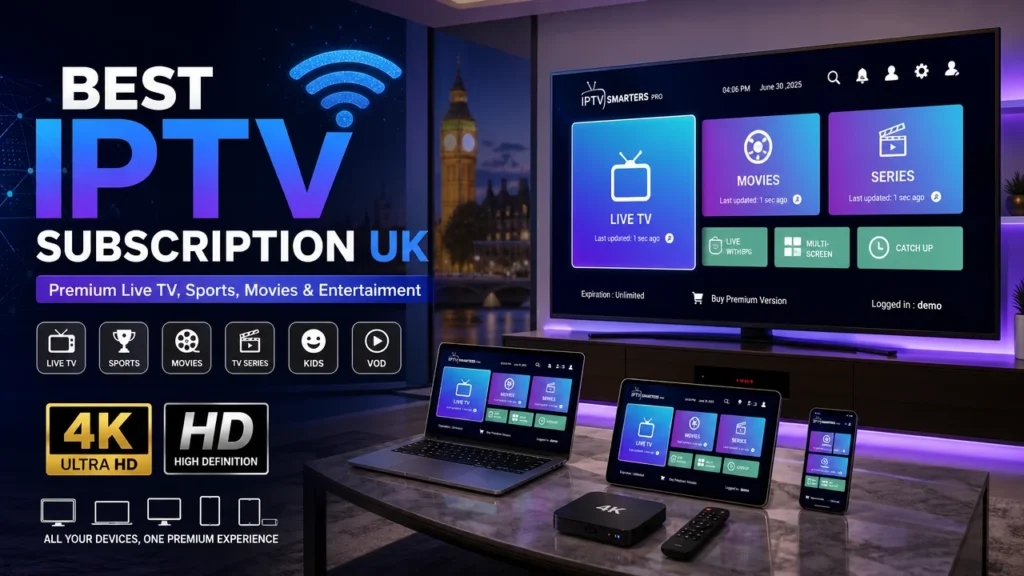
The screen above is the moment that convinces most people to try IPTV: a live match on a big screen, a working guide, and no cable box in sight. It is representative of what a good IPTV run looks like. The caveat is that it represents the good moments — and IPTV, like any live-streaming product, is judged by its worst moments too.
Who IPTV is genuinely good for
Cord-cutters who want live sports without cable pricing. If you watch NFL, Premier League, UFC, or regional sports regularly and are tired of $100+ cable bundles, IPTV is the most cost-effective route. The math only gets better if you combine it with free services like Pluto TV for casual viewing.
People comfortable with basic troubleshooting. If you can sideload an app, change a DNS setting, or restart a router with confidence, IPTV will not be a struggle. The same applies to anyone who enjoys optimizing a setup: choosing the right player, configuring catch-up, or setting a custom EPG.
Travelers and expats. One subscription works on a laptop or tablet anywhere with internet, and expat households often find their home-country channels on IPTV far easier than through legal US streaming services.
Households that already have a fast connection. A wired or strong 5GHz Wi-Fi connection removes the most common self-inflicted buffering causes. If your internet is already solid for Netflix in 4K, IPTV will be too.
Who should look elsewhere
People who want licensed, guaranteed service. IPTV is not a regulated product. There is no refund policy, no consumer protection board, and no one to call when a channel feed vanishes mid-season. If that makes you uncomfortable, legitimate alternatives like YouTube TV, Hulu + Live TV, or a slim cable package are the safer — albeit pricier — choice.
Anyone who will not read setup instructions. Sideloading on Firestick, finding the right player app, and adjusting buffer settings will block you. If the phrase "unknown sources" makes you nervous, IPTV's learning curve is not for you.
People with slow or capped internet. IPTV needs at least 25 Mbps for reliable HD, and 50 Mbps or more if multiple screens are active. If you are near a data cap, a few hours of live sports can chew through a significant chunk of your allowance.
Viewers who only need mainstream on-demand shows. Netflix, Hulu, and Amazon Prime already cover that. IPTV's real advantage is live channels — and if you do not watch those, you are paying for a service that annoys you more than it helps.
IPTV vs cable vs the streaming apps you already pay for
To decide whether IPTV is worth it, you need a straightforward comparison against the other options in front of you. The table below summarizes the practical differences.
| Factor | IPTV | Cable | Live TV streaming | Free FAST services |
|---|---|---|---|---|
| Monthly cost | $10–$20 | $80–$120+ | $60–$80 | $0 |
| Live sports | Broad coverage, all major leagues | Good, with regional packages | Good, with regional limits | Limited, mostly niche sports |
| Legal certainty | Grey area for many providers | Fully licensed | Fully licensed | Fully licensed |
| Setup effort | Medium — sideloading needed | Low — installer does it | Low — app download | Low — app download |
| Consumer protection | Minimal | Strong | Strong | Strong (free, no risk) |
If you compare IPTV vs cable which is better, the honest answer is: cable wins on reliability and consumer protection, while IPTV wins on price and sheer breadth of channels. Streaming services like YouTube TV sit in the middle — legal, convenient, but priced close to cable with less channel volume. Free FAST apps are genuinely useful as a fallback, but they cannot replace live leagues or current-season shows.
Where to Buy
Compare package options and check what the current offer includes before you decide.
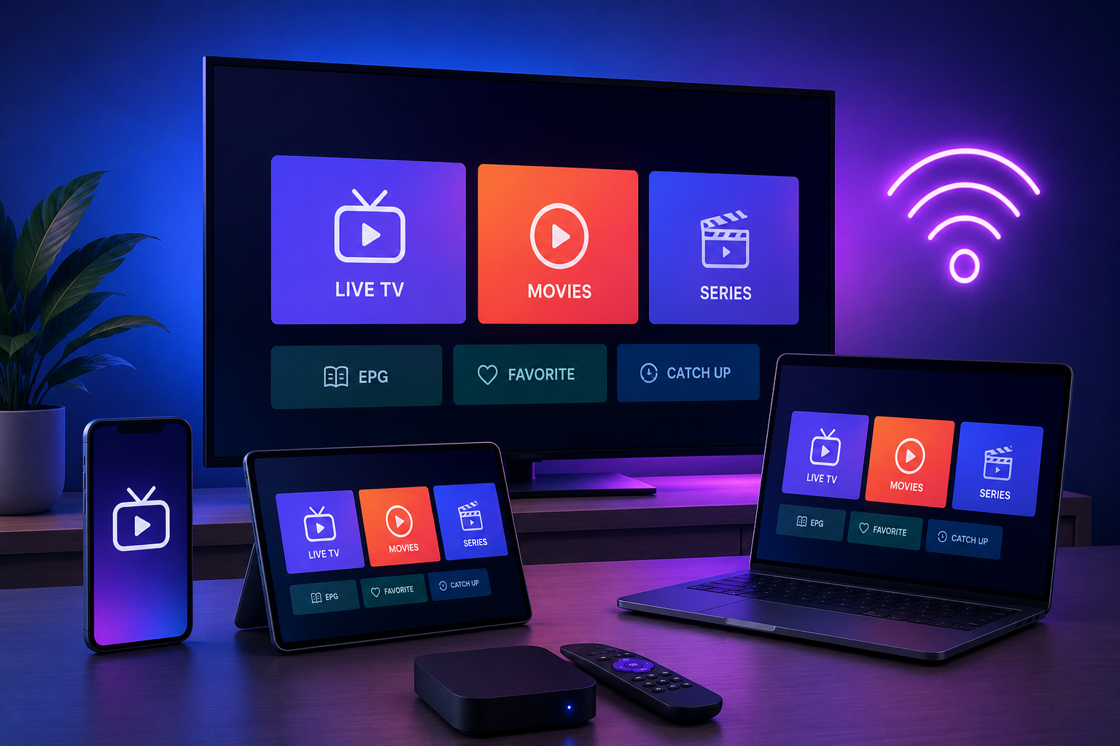
The diagram above illustrates the practical reality of an IPTV setup: one provider connection shared across every screen in the house. That sharing is what makes IPTV flexible and why it is a better fit for a household than for a single viewer with basic needs.
After a month of daily use, the pattern is consistent: IPTV delivers extraordinary value if you are willing to trade legal certainty and guaranteed reliability for cost and flexibility. The realistic approach is a short trial, a month-to-month plan, and a free backup service like Pluto or Tubi for the days when sports streams stall. If you want a structured starting point, the how does IPTV work overview at IPTV Stream Pulse lists current package options and explains what each one includes before you test any provider.
Whatever you do, resist the yearly plan. The single best piece of advice in this entire article is: pay monthly, test on match day, and keep a backup stream ready. IPTV is not a product you buy once; it is a product you manage week to week.
The Bottom Line
IPTV is the best value in live television if you want sports without a cable contract — but you are deliberately buying an unregulated service with real risk attached. Use it monthly, keep a backup plan, and treat any provider that demands a year of payment upfront with deep suspicion.
subscription linkThis link goes to the seller's official checkout. If you purchase through it, we may earn a commission at no additional cost to you. Our assessment is written independently of that arrangement.
Frequently Asked Questions
How does IPTV work on a smart TV?
IPTV on a smart TV needs two things: a player app and a subscription credential from a provider. On Samsung and LG TVs, apps like IPTV Smarters Pro are available directly from the official app store. On Android TVs (including Sony, TCL, and Hisense models), TiviMate works well and can be sideloaded if it is not listed. Once installed, you enter the provider's playlist URL or Xtream Codes login, and channels populate in a guide that behaves much like cable. The setup takes about ten minutes on average.
What is the best IPTV service for live sports?
There is no stable single answer because IPTV providers change frequently, and a service that is great in March can be unreliable by autumn. What matters more than the name: a provider with multiple backup servers for sports events, and one that performs well on Sundays during NFL games. Check current IPTV review Reddit threads for recent complaints about "sports stream down" before paying. Always ask for a 24-hour trial and test a live match at its real kickoff time — that test reveals more than any advertised channel count.
How do I set up IPTV on a Firestick?
Firestick setup always involves sideloading because TiviMate is not in the Amazon Appstore. First, enable "Apps from unknown sources" in the Firestick developer options. Then install the Downloader app and use it to download the TiviMate APK from a trusted site. After installation, open TiviMate, choose "Add playlist," and enter your provider's URL, username, and password. When the channel list loads, set buffer size to "large" and test a live sports channel during a peak hour rather than in the middle of the night.
IPTV vs cable: which is better?
Cable wins on reliability, consumer protection, and simplicity: you have a contract, a support line, and a legal guarantee that you are receiving properly licensed content. IPTV wins on price and channel volume: $10 to $20 a month buys more live sports and international channels than any US cable package offers. The deciding factor is your tolerance for risk. If you can accept occasional buffering and the chance that a provider vanishes, IPTV is dramatically better value. If you need guaranteed service with someone to call, cable is the safer choice.
Is IPTV legal in the US?
IPTV technology is legal in the US — it is simply video delivered over the internet. What determines legality is content: a provider must hold the distribution rights for the channels it sells. Many low-cost IPTV providers resell streams without those rights, which is unauthorized redistribution. Individual viewers are rarely the target of enforcement, but the services themselves face shutdowns, domain seizures, and legal pressure, which leaves subscribers without working products. If legal certainty matters to you, check whether a provider states its licensing clearly — and be aware that most cheap services do not.
Where can I buy a reliable IPTV subscription?
You cannot buy a genuinely reliable IPTV subscription from a mainstream store; providers sell through their own websites, Telegram channels, and reseller panels. The most practical route is to start with a short trial, verify that live sports work at peak kickoff times, then pay for a single month rather than a year. Providers that have operated for more than two years and reply to support requests quickly are a better bet than newer operations. Comparison pages like IPTV Stream Pulse list current offers side by side, but the final test is always your own trial.
How do I fix IPTV buffering?
Most IPTV buffering is caused by the provider's server load, but your own network can make it worse. Connect your Firestick or TV by Ethernet where possible, or move it closer to the router. Inside the player app, increase the buffer size to "large" and try a different player like TiviMate if your current one stutters. If your provider offers multiple server ports or connection URLs, try switching to a less common port. When buffering happens at the same time every evening regardless of your internet performance, it is the provider, not you.
What do IPTV reviews on Reddit say in 2025?
Reddit in 2025 is consistent on two points: good providers are outstanding value, and you should never pay for a year upfront. Users report that some once-popular providers have become inconsistent after raising prices, and there is a growing trend of "legal IPTV" services that charge higher prices in exchange for licensed content. The common advice thread across every subreddit is practical: keep a backup IPTV subscription, use free FAST apps as a fallback, and test a provider on a real match day before committing. Forum recommendations shift quickly, so look at threads from the last two or three months rather than year-old posts.
Disclosure: Some links in this article are affiliate links, meaning we may earn a commission if you make a purchase — at no additional cost to you. This does not influence our editorial assessment, which is based on publicly available information about the product.